



Specifications:
|
Dimension |
3000-4000 × 135 × 20 mm |
|
Material |
Finnish Pine |
|
Color |
12 colors |
|
Feature |
UV Resistant, Weather Resistant, Moisture Resistant, Enhanced Durability, Natural Wood Texture,Customizable Sizes |
Description:
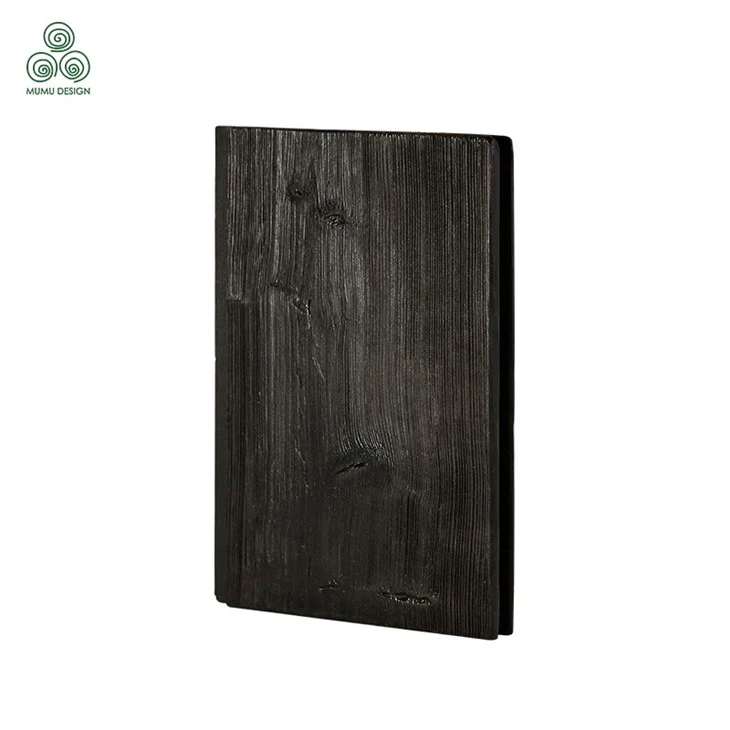
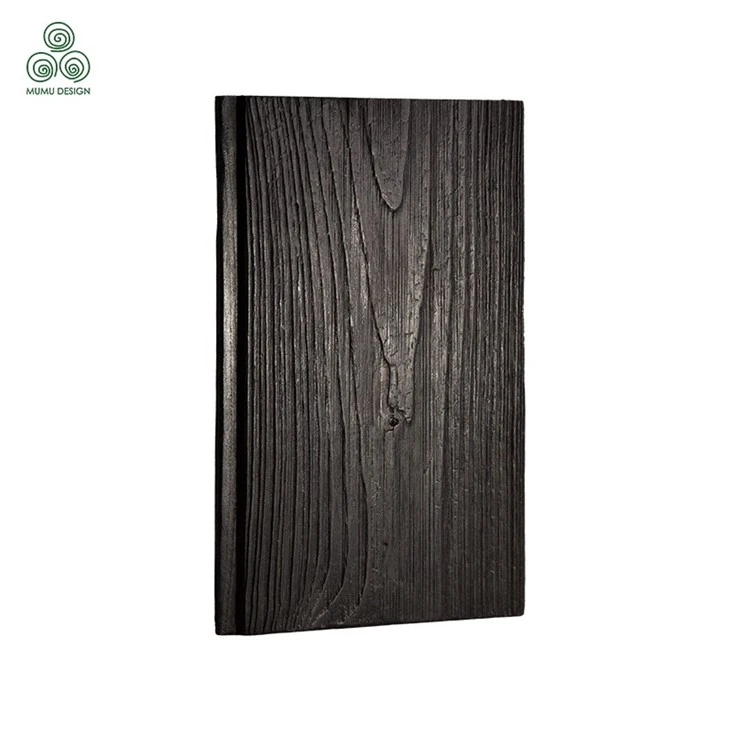
A Black Timber Finish Defined by Fine Linear Grain
A dark exterior surface can appear almost seamless from a distance, yet reveal considerable detail when viewed closely.
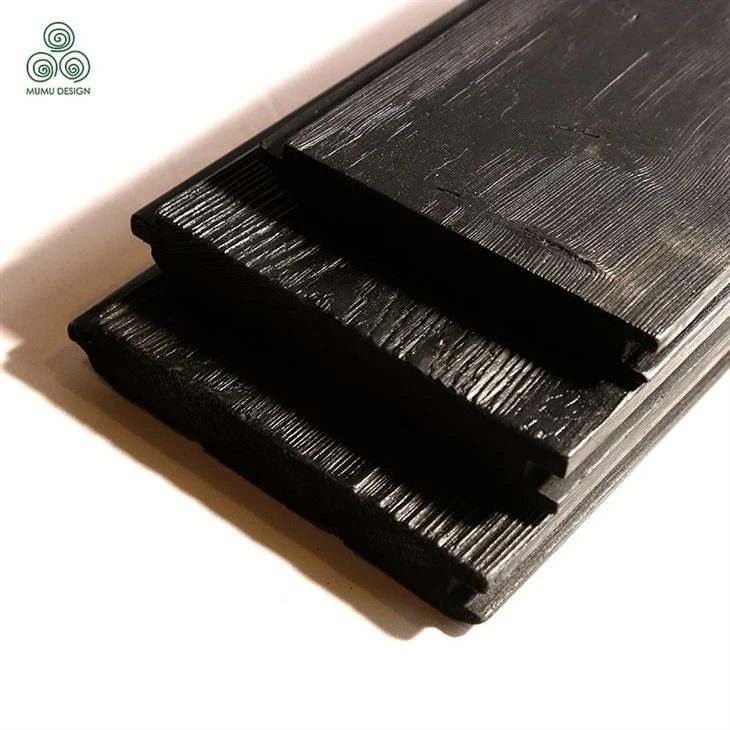
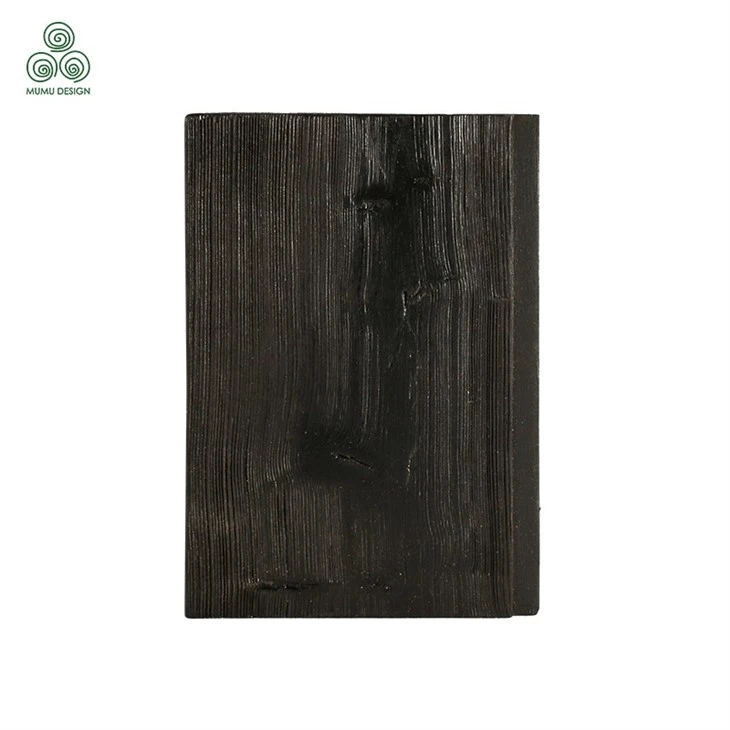
MUMU DESIGN's Black Linear-Grain Shou Sugi Ban Cladding features elongated grain markings that run along the timber boards. Fine grooves and subtle variations in the black finish create a directional pattern without the prominent cracked carbon texture associated with some deep-char products.
The grain remains visible beneath the dark surface, giving the material a character that differs from uniformly painted panels.
For architects working with simple building forms, this restrained texture offers an opportunity to introduce natural detail without adding complex decorative elements.


Creating a Continuous Vertical Black Timber Facade
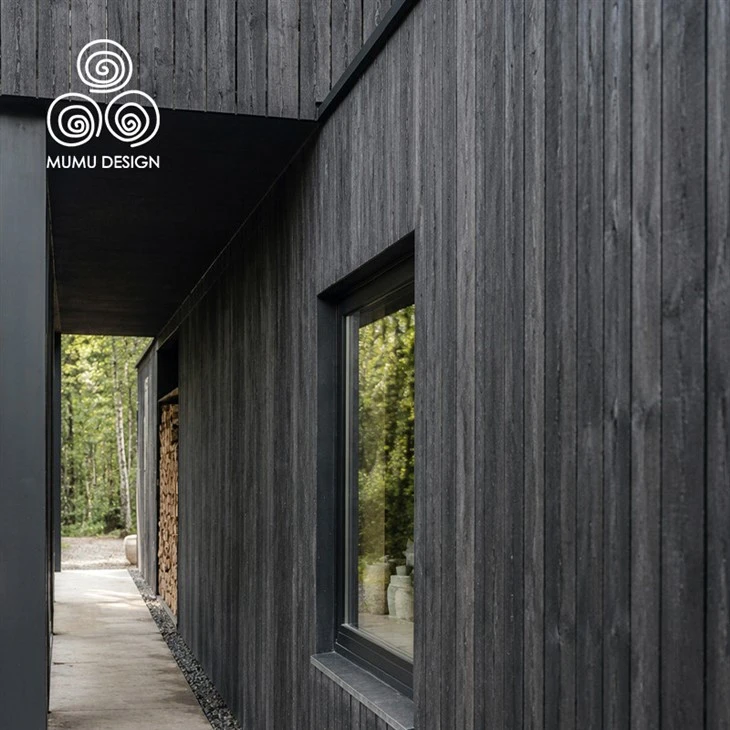
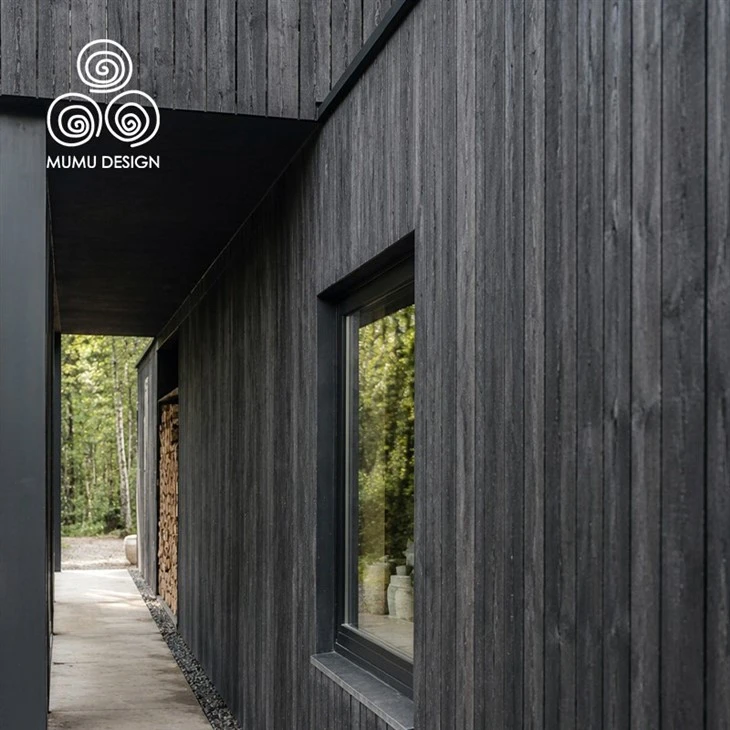
The reference architectural image illustrates a building exterior with vertically arranged black timber boards.
The dark cladding extends across the wall surface and surrounds recessed architectural openings. Narrow board joints establish a repeating rhythm, while surrounding greenery provides contrast against the black exterior.
Rather than treating the wall as a series of separate decorative panels, the vertical layout presents the timber as one continuous architectural surface.
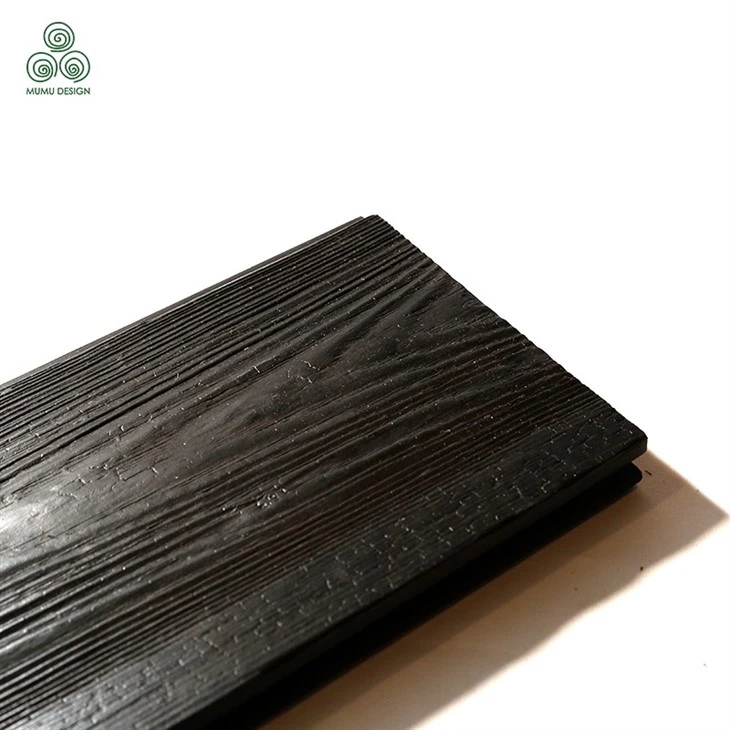
Edge Profiles and Board Joint Planning
One of the most important details in exterior wood cladding is the connection between adjacent boards.
The product photographs include close-up views of machined board edges. Depending on the confirmed specification, MUMU can discuss profiles such as tongue-and-groove, shiplap, or other project-specific joining details.
Profile selection affects more than appearance. It also influences the exposed face width, joint configuration, fixing arrangement, and installation method.
For a continuous black facade, buyers should confirm:
Nominal board width and actual visible coverage.
- Approved edge profile and joint appearance.
- Orientation of the boards.
- Support and fixing requirements.
- Treatment of cut ends, corners, and openings.
A profile drawing or physical sample should be approved before production, particularly where the project involves large exterior elevations.
Custom Board Dimensions and Profiles
Exterior cladding projects often require different board proportions, joint details, and finishing specifications.
MUMU supports custom development according to architectural drawings and project requirements.
Available options may include:
- Customized board lengths, widths, and thicknesses
- Tongue-and-groove or other suitable joining profiles
- Selected natural wood species
- Different brown color tones
- Surface brushing and texture adjustments
- Protective finishing options for outdoor exposure
- Project-specific export packaging
Actual production options should be confirmed according to the selected wood species and order specifications.
Exterior Installation and Finish Considerations
Before specifying black charred timber cladding, the project team should review the wall assembly and environmental exposure conditions.
Exterior timber generally requires a suitable drainage and ventilation arrangement, compatible battens, appropriate movement allowances, and corrosion-resistant fixings.
The selected edge profile must also be compatible with the proposed installation direction.
Black surfaces exposed to strong sunlight may experience elevated surface temperatures, while moisture exposure and UV radiation can affect the appearance of exterior finishes over time.
Maintenance recommendations should therefore be based on the actual timber species and protective coating system.
Where building regulations require fire-performance documentation, certification must be checked for the specified product and wall assembly. Surface charring alone does not establish a fire rating.
FAQ:
Q1: What is the difference between linear-grain and deep-char Shou Sugi Ban?
A1: Linear-grain finishes emphasize the elongated wood grain, while deep-char finishes often retain a more pronounced cracked carbon surface. The final appearance depends on the treatment and finishing process.
Q2: Can black Shou Sugi Ban boards be installed vertically?
A2: Yes, vertical installation can be considered when the board profile, fixing system, support arrangement, and drainage details are suitable for the building.
Q3: Is tongue-and-groove available for black charred wood cladding?
A3: MUMU can review tongue-and-groove and other machined profiles for custom orders. The exact profile, dimensions, and joint details should be confirmed through drawings or samples.
Q4: How do I calculate the required quantity of exterior siding?
A4: Measure the net cladding area and account for the effective coverage width of each board, openings, cutting waste, and project-specific installation requirements.
Q5: Can the black finish and wood grain be customized?
A5: MUMU can review selected timber species, surface treatments, and black finishing references. The achievable grain appearance depends on the material and approved production process.
Request Custom Black Shou Sugi Ban Cladding
For architectural projects, wholesale distribution, or customized exterior siding, contact MUMU DESIGN with your drawings, preferred profile, order quantity, and delivery country.
Our team can assist with sample selection, manufacturing feasibility, and project-based export quotations.
Email: sales@mumu-ing.com
Hot Tags: black linear-grain shou sugi ban cladding, China black linear-grain shou sugi ban cladding manufacturers, suppliers, factory, Bamboo Shou Sugi Ban Cladding, charred pine siding, charred timber cladding, Finnish Shou Sugi Ban Cladding, shou sugi ban wood burning, shou sugi ban wood siding