





Specifications:
|
Dimension |
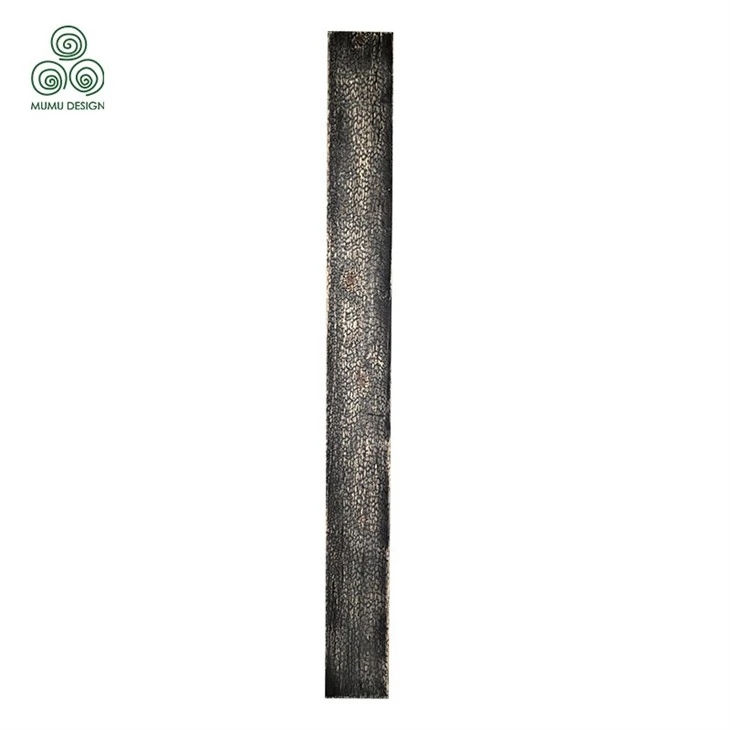
3000-4000 × 135 × 20 mm |
|
Material |
Carbonized Finnish Pine Wood |
|
Color |
Standard & Customized color |
|
Feature |
UV Resistant, Weather Resistant, Moisture Resistant, Dimensional Stability |
Description:
When Charcoal Black Meets Warm Brown Timber
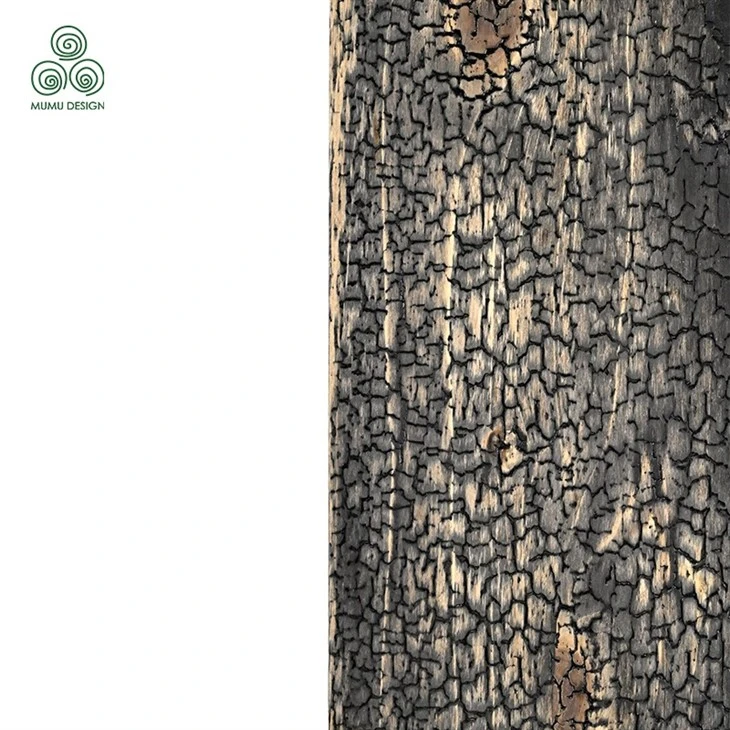
The defining feature of this Shou Sugi Ban cladding is the contrast within its surface.
Dark, irregular charred patterns spread across the boards, interrupted by narrow areas of warm brown coloration. Instead of forming straight grain lines, the visible pattern breaks into uneven, scale-like shapes that vary in size and direction.
From a distance, the timber reads as a predominantly dark architectural material. Viewed closely, the brown highlights become more apparent, revealing the complexity of the textured surface.
This two-tone appearance gives architects a different option from uniform black wood siding. It provides strong visual definition while retaining a connection to the natural tones of timber.
The balance between black and brown should be evaluated through physical samples, as lighting conditions and individual boards can influence the final appearance.


Design Applications for Charred Wood Cladding:
A Textured Exterior for Cabins and Woodland Retreats:
Modern cabin architecture often relies on a limited selection of exterior materials. Timber, glass, metal, and stone are arranged to create buildings that feel connected to the surrounding landscape.
Black timber cladding can play an important role in this approach.
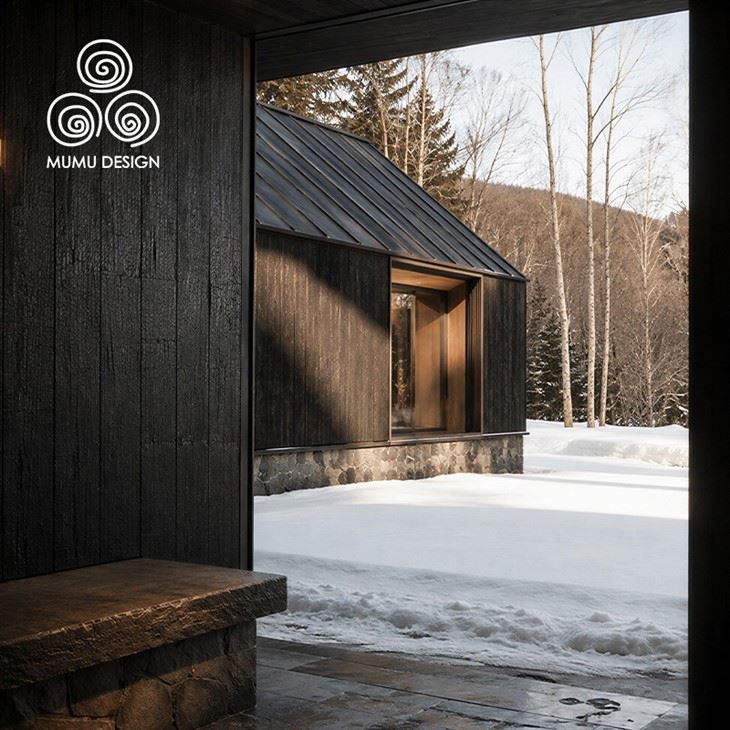
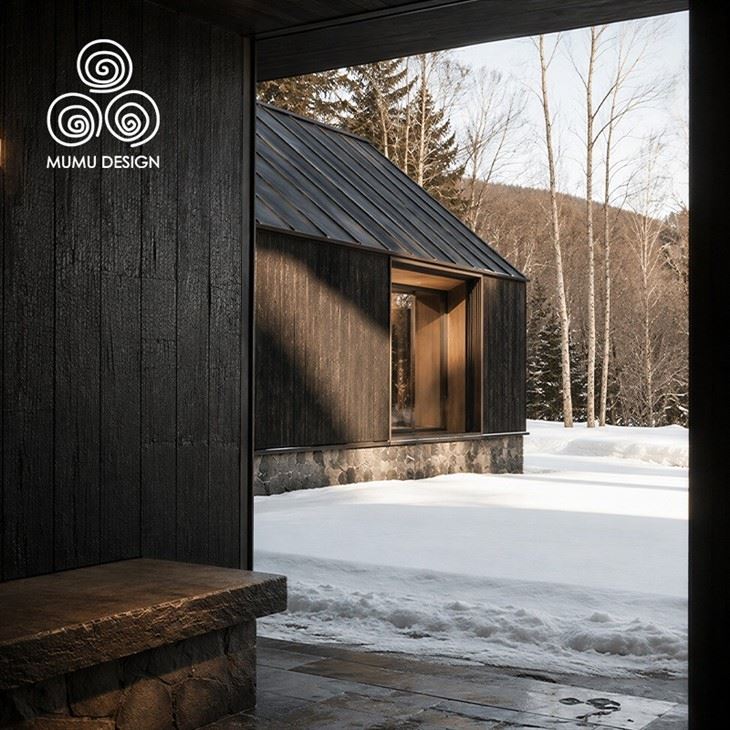
The reference architectural photograph shows a dark-clad building surrounded by snow and bare trees. Against the pale winter landscape, the darker facade becomes clearly defined without introducing additional decorative colors.
The contrasting tones of the charred wood are particularly relevant to cabin designs where natural material variation is part of the architectural concept.
Modern Cabin Exterior Design:
For a contemporary woodland residence, black and brown charred wood siding can be considered for selected exterior walls, entrance volumes, and sheltered architectural features.
Its irregular texture creates an interesting contrast with the straight lines of window frames and building edges.
When paired with timber entrance details, the warm brown areas of the charred finish can help connect the darker cladding with lighter natural wood elements.
Mountain Retreats and Holiday Cabins:
In mountain-inspired architecture, material choices often need to respond to changing light, seasonal surroundings, and the building's overall form.
Dark cladding can appear particularly prominent against snow or pale skies, while its texture becomes easier to appreciate at close range.
However, visual suitability does not establish suitability for severe winter exposure. The selected product's durability, coating system, and installation requirements must be checked against the actual climate and applicable building regulations.
Custom Charred Wood Cladding for Architectural Orders
MUMU DESIGN supports custom wood products for overseas architectural and construction projects.
Exterior Installation and Material Selection
The selection of charred wood siding should consider both visual appearance and the requirements of the building envelope.
Appropriate fixing methods, ventilation, drainage, and detailing around openings are important considerations for exterior timber cladding.
The project designer should also review the selected board profile, coating maintenance requirements, and compatibility with the supporting wall system.
Deeply textured carbonized surfaces may require special attention during handling, cutting, and installation.
Any required fire classification or weather-performance documentation must apply to the selected material and installation assembly.
Charring alone does not establish fire resistance or suitability for extreme climates.
FAQ:
Q1: What makes black and brown Shou Sugi Ban different from fully black siding?
The primary visual difference is the combination of dark charred areas and visible warm brown highlights. This gives the surface more color variation than a uniformly black finish.
Q2: Is charred wood siding suitable for modern cabins?
Charred wood siding can be specified for cabin exteriors when the timber species, treatment, profile, and wall assembly meet the project's requirements. Its dark finish is particularly compatible with contemporary cabin architecture.
Q3: Can Shou Sugi Ban be used on buildings in snowy climates?
It may be suitable, but the charred appearance alone does not establish performance in snow, freezing temperatures, or repeated moisture exposure. Project-specific technical verification and appropriate installation detailing are necessary.
Q4: Can the amount of brown coloration be customized?
MUMU can review reference samples and requested color preferences. The achievable appearance depends on the wood species, charring method, and finishing process. Final color expectations should be agreed upon before production.
Q5: Will every board have the same crackled pattern?
Natural timber and surface treatment can produce visible variation between boards. Buyers should establish an approved sample and an acceptable appearance range for larger projects.
Q6: How can I request wholesale pricing for custom charred wood cladding?
Please share your required dimensions, preferred texture, order quantity, and delivery location. MUMU DESIGN will provide a customized quotation, production lead time, and shipping options.
Hot Tags: black crackle shou sugi ban cladding for cabin exteriors, China black crackle shou sugi ban cladding for cabin exteriors manufacturers, suppliers, factory, carbonized wood siding, charred timber cladding, shou sugi ban, shou sugi ban exterior cladding, shou sugi ban wood burning, shou sugi ban wood treatment